


Lighted Bollards for Outdoor Safety and Modern Design

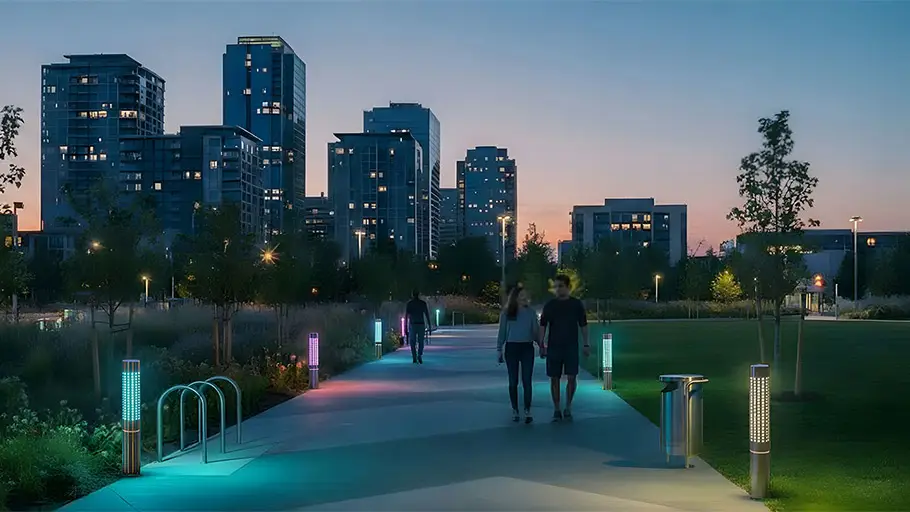

Lighted bollards have evolved from simple traffic barriers into essential elements of modern urban design, combining safety, aesthetics, and energy efficiency. These illuminated fixtures enhance visibility while complementing architectural landscapes, making them ideal for pathways, commercial spaces, and public areas.
What Are Lighted Bollards?
Definition and primary functions
Lighted bollards are short, sturdy vertical posts (typically 30-48 inches tall) equipped with integrated LED lighting systems that provide ambient illumination for outdoor spaces. They serve multiple functions: enhancing nighttime visibility, guiding pedestrian movement, improving security, and creating welcoming outdoor environments. Modern bollards are constructed from durable materials like stainless steel, aluminum, and polycarbonate, ensuring resilience in harsh outdoor conditions.
How they differ from standard bollards
Standard bollards serve purely as physical barriers without lighting. Lighted bollards enhance this by incorporating illumination systems in two main configurations: hardwired systems that connect to electrical grids for consistent performance, and solar-powered units that operate independently using photovoltaic panels and rechargeable batteries.
Why lighted bollards are essential in modern urban design
In contemporary urban planning, lighted bollards create safe, accessible cityscapes that balance aesthetic appeal with functionality. They illuminate pathways while reducing accident risks, provide low-glare lighting that complies with dark sky standards, and contribute to wayfinding in complex urban spaces. Reliance Foundry emphasizes that lit bollards balance safety with visual appeal, enhancing both practical safety features and the visual character of spaces.

Key Benefits of Lighted Bollards
Increased safety and visibility
Lighted bollards significantly enhance safety by illuminating potential hazards and improving visibility in outdoor environments. They provide consistent illumination that helps pedestrians navigate confidently while acting as visual markers that define traffic routes and boundaries between vehicular and pedestrian zones. This clear demarcation helps prevent accidents and deters criminal activity by eliminating dark hiding spots.
Modern aesthetic and landscape integration
Beyond functionality, lighted bollards contribute significantly to aesthetic quality with diverse designs from sleek contemporary to classic traditional styles. Our collections span from the eco-friendly EcoBright line to the modern Skyline series, offering various color temperatures and light distribution patterns to create specific moods. The integration of lighting into security bollards represents a design-forward approach that seamlessly merges illumination with protective infrastructure.
Energy efficiency with LED and solar technology
LED technology dramatically reduces energy consumption by 75-80% compared to traditional lighting while maintaining superior illumination quality. A 12-watt LED system produces comparable illumination to a 70-watt metal halide system, resulting in annual operating costs of approximately $13 versus $93. Solar-powered bollards eliminate electricity costs entirely while harvesting renewable energy through high-efficiency panels.
Low maintenance and long lifespan
LED bollard lights boast lifespans of 25,000 to 50,000 hours (11-22 years at 12 hours daily operation), dramatically outlasting traditional alternatives. Solar systems require minimal maintenance beyond periodic panel cleaning, with lithium batteries lasting 5-12 years. This longevity significantly reduces replacement frequency and maintenance costs.

Common Applications of Lighted Bollards
Pathways and parks
Lighted bollards illuminate walkways in parks and nature trails, providing soft, low-glare illumination that guides visitors safely without disrupting natural ambiance. Our fixtures are specifically designed for pathway applications, offering both solar and hardwired options that enhance safety while maintaining aesthetic character. Proper spacing of 3-5 meters ensures consistent illumination without dark spots.
Driveways and parking lots
In driveways and parking areas, lighted bollards act as markers guiding vehicles safely while delineating edges to prevent landscape damage. They provide essential visibility for both pedestrians and drivers in parking areas. Well-lit facilities help prevent accidents and improve security.
Building entrances and commercial spaces
At commercial buildings, bollards enhance both aesthetics and functionality by providing crucial visibility for visitors while adding architectural interest. Our Elysium Lighted Bollard exemplifies fixtures suitable for high-end commercial districts, combining minimalist design with essential nighttime visibility. The dual-purpose nature of security bollards with integrated lighting is particularly valuable in commercial applications.
Public plazas and campuses
Public spaces benefit significantly from bollard lighting that illuminates pathways while managing pedestrian flow and protecting areas from vehicle encroachment. These installations create well-defined routes through open spaces while contributing to overall design aesthetics that make spaces feel secure and inviting.

How Long Do Lighted Bollards Last?
Expected lifespan of LED vs. solar options
LED bollard lights typically last 25,000 to 50,000 hours, with premium models achieving 60,000-70,000 hours or more. This represents 11-22 years of operation at 12 hours daily. Solar bollards have similar LED lifespans, but battery components require replacement every 5-12 years.
Factors that affect longevity
Weather conditions, material quality, and maintenance practices significantly influence actual lifespan. Premium materials like stainless steel (316 grade) and aluminum provide superior corrosion resistance. Protective coatings and regular maintenance every 6 months extend operational life, with harsh environments requiring more frequent attention.
Tips to extend lifespan
Implement proactive maintenance including regular visual inspections, cleaning with mild detergent and water, and prompt attention to any signs of damage or corrosion. For solar bollards, keep panels clean and monitor battery performance. Apply protective treatments every 6-12 months to protect finishes.

Choosing the Right Lighted Bollard
Design and material options
Bollards are available in various shapes and materials to suit different applications. Stainless steel (particularly 316 grade) offers exceptional corrosion resistance ideal for harsh environments. Aluminum provides excellent weather resistance with reduced weight. Concrete offers minimalist aesthetics with exceptional impact resistance. Reliance Foundry offers six distinct collections ranging from ductile iron with powder coating to premium stainless steel finishes.
Wattage, brightness, and light distribution patterns
LED bollards typically range from 3-24 watts, with residential applications requiring 3-12 watts and commercial landscapes benefiting from 15-30 watts. Lumen outputs range from 300-3,000 lumens depending on application needs. Distribution patterns include Type V (360-degree) for comprehensive coverage, louver designs for downward-directed light minimizing glare, and asymmetrical patterns for targeted illumination.
IP ratings and weatherproofing standards
IP ratings indicate protection against solid particles and liquids. IP65 is most common for outdoor bollards, providing complete dust protection and resistance to water jets. IP67 allows temporary submersion and is ideal for wet environments. Coastal or severe weather locations should specify IP66 or higher.

Installation and Maintenance Best Practices
Installation spacing for consistent lighting
Optimal spacing typically ranges from 8-10 feet for standard pathway lighting (where vehicle intrusions are not a concern), with safety-focused applications requiring 3-5 feet spacing to eliminate dark spots. Higher-output bollards can be spaced farther apart while maintaining adequate illumination levels.
Wiring vs. solar installation considerations
Hardwired installation requires trenching and electrical infrastructure but offers consistent performance and centralized control. Solar installation is simpler with no wiring required, making it ideal for remote locations and green building initiatives. Consider sunlight exposure, maintenance access, and performance requirements when choosing between options.
Cleaning and inspection checklist
Implement monthly visual inspections in standard environments (weekly in harsh conditions) checking for damage, corrosion, and lighting function. Clean quarterly with mild soap and water, ensuring solar panels remain debris-free. We recommend routine inspection and cleaning every 6 months minimum, with saltwater or high-pollution environments requiring more frequent attention.
FAQ
What is the purpose of a lighted bollard?
Lighted bollards illuminate pathways and pedestrian areas for enhanced safety, act as physical and visual barriers guiding traffic, and contribute to landscape aesthetics while creating welcoming environments.
How long do bollard lights last?
LED bollards last 25,000-50,000 hours (11-22 years at 12 hours daily), while solar systems have similar LED lifespans with batteries lasting 5-12 years.
Are lighted bollards energy-efficient?
Yes, LED bollards consume 75-80% less energy than traditional lighting. A 12-watt LED system replaces a 70-watt metal halide, reducing annual costs from $93 to $13.
Can lighted bollards be solar-powered?
Yes, solar bollards operate independently using photovoltaic panels and rechargeable batteries, requiring no electrical wiring and eliminating ongoing energy costs.
What is the ideal spacing between lighted bollards?
Standard spacing ranges from 8-10 feet for pathways, with safety-focused applications requiring 3-5 feet spacing to ensure overlapping coverage that eliminates dark spots.